Industrial Sector Solutions
The core objective of industrial ventilation is to exhaust harmful gases, dust, residual heat, and moisture generated during production processes, supplement fresh air, and control indoor environmental parameters (temperature, humidity, pollutant concentration, air velocity) within safe and regulatory limits. This ensures worker health, improves production efficiency, protects equipment precision, and reduces the risk of safety incidents.
Drying Industry
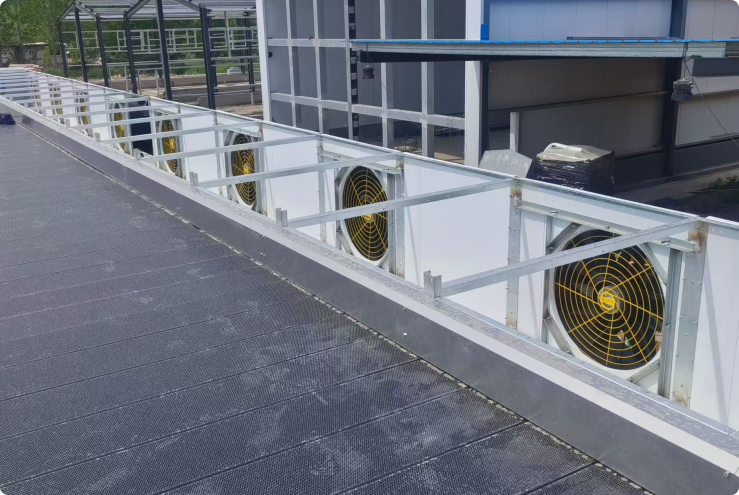
As a supporting industry across multiple sectors of the national economy, the drying industry is widely applied in key fields such as agriculture, food processing, chemical, pharmaceutical, textile, and new energy materials. Driven by the "Dual Carbon" strategy, technological innovation, and market demand upgrades, the industry is undergoing a deep transformation from traditional high-energy consumption models toward green, intelligent, and customized development, forming a diversified development landscape.
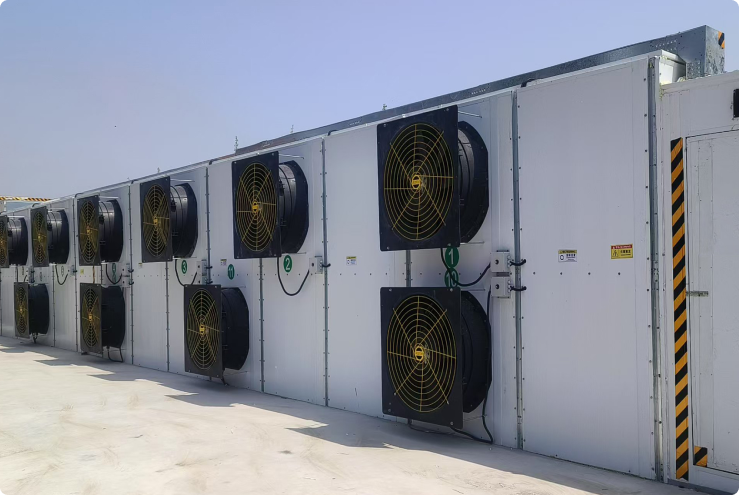
Manufacturing Industry
As a pillar industry of the nation, the manufacturing sector's role in economic development is self-evident. A healthy indoor climate is crucial for employee health and productivity. In many manufacturing processes, drying, cooling, and ventilation are key steps that directly affect production speed and product quality. Whether cooling transformers, drying coatings, or managing heat generated by machinery, maintaining constant and controlled airflow can significantly reduce processing time and improve quality. Aerowind continuously engages in R&D and practical application in manufacturing, offering various installation options, airflow capacities, and static pressure fans to meet diverse production needs.
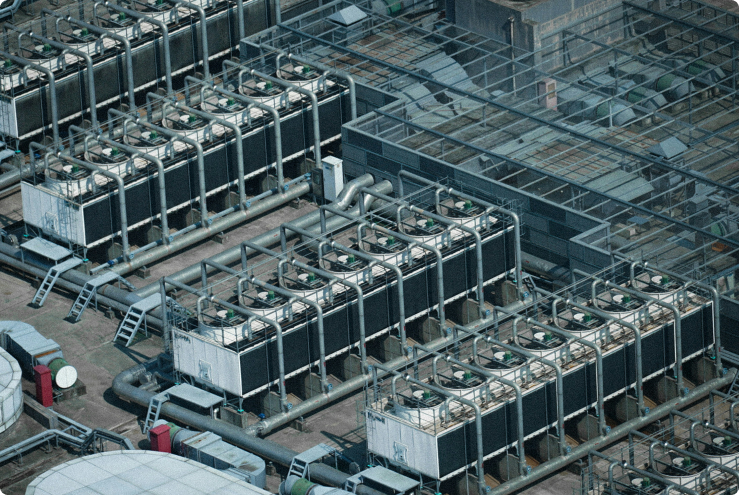
Energy & Environmental Sector
In energy-related scenarios within the industrial sector such as energy production, conversion, transmission, and environmental treatment, fan cooling is a critical support measure to ensure stable equipment operation, improve energy utilization efficiency, and reduce pollutant emissions. Its core function is to use forced airflow to remove excess heat generated during equipment operation or reactions, preventing performance degradation, equipment damage, or safety hazards due to overheating.

Data Centers
As a crucial information processing and storage hub in the industrial sector, data centers house IT equipment such as servers, switches, and storage arrays that generate substantial heat during high-speed computation and data read/write operations. To prevent equipment failure or performance degradation due to overheating, precision air conditioning systems are equipped with condenser fans, using forced airflow to rapidly dissipate heat from the condenser surface to the outdoors. For high-density cabinets (e.g., blade server cabinets), a coordinated cooling approach combining precision air conditioning with internal cabinet fans is employed to precisely control cabinet temperatures and maintain a stable working environment in data centers.